
Moonshot AI · воплощённый ИИ · большие языковые модели
A brain without a body: how large language models are becoming the core of robots
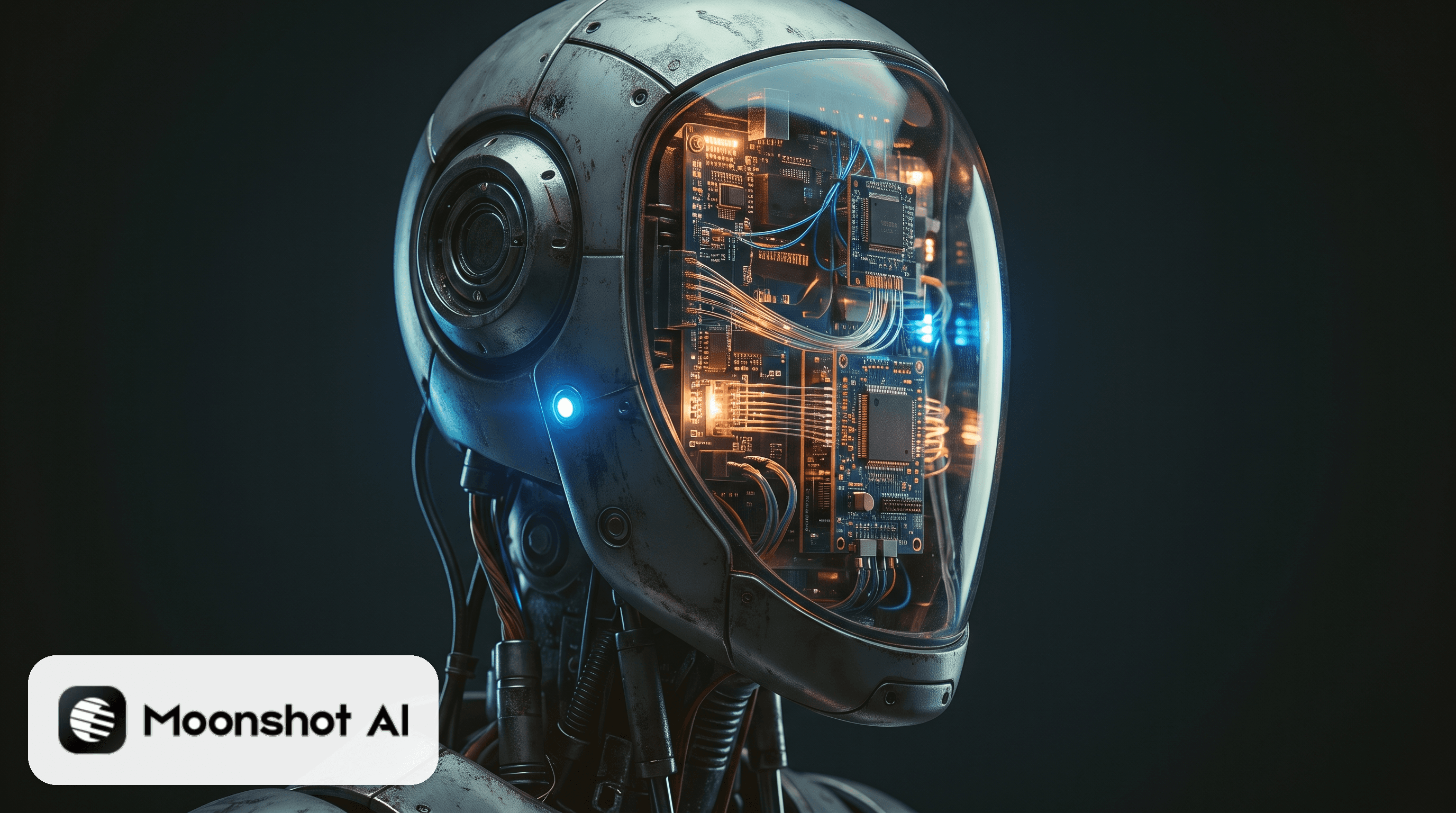
Not every company important to Chinese robotics manufactures robots itself. Moonshot AI / 月之暗面 — a large language model developer founded in March 2023 in Beijing by Yang Zhilin, Zhou Xinyu, and Wu Yuxin — doesn't produce hardware at all: the company's product is the Kimi chatbot and the family of models around it, the first in the industry to support a 128,000-token context window. The company is counted among the so-called "tigers of Chinese AI" — a narrow circle of foundation-model developers setting the pace for the whole industry.
Why a language model matters for robots
A humanoid or service robot is physically capable of grasping an object or walking down a corridor — but the decision of which object to grasp, in what order to perform a task, and how to react to an unexpected obstacle is increasingly made not by a rigidly programmed algorithm but by a model of the same class underlying chatbots like Kimi. The difference is that instead of natural-language dialogue, the model processes a stream of camera and sensor data and turns it into a sequence of physical actions — the "embodied intelligence" the entire industry is now talking about.
Division of labor forming in the industry
The market structure taking shape echoes what already happened in smartphones a decade earlier: some companies specialize in "hardware" — mechanics, actuators, sensors — while others focus on the software core, which can be integrated into different hardware platforms. Moonshot AI sits on the "brain" side of this structure: the company isn't formally a hardware supplier, but models of this class underpin perception and planning in humanoid and service robots sold by other manufacturers.
What it means for a robot buyer
For an end buyer, this means the question of "which model powers the robot's brain" is becoming as important as questions about motor capability and payload. A manufacturer using a leading-edge perception model — whether developed in-house or via partnership — gains a notable edge in tasks requiring flexible reaction to unpredictable conditions, not just execution of a rigidly defined movement sequence.
A catalog of robot manufacturers running on leading-edge AI platforms is available on the Aura Robotics site.