
умный общепит · Xixiang · безлюдные точки питания · робот-бариста
Xixiang: the unmanned canteen as a ready scenario, not a pile of vending machines
A vending machine dispensing pre-made food and a full unmanned canteen are two different levels of automation, even though both run without staff. The first hands out a product prepared in advance; the second cooks a dish to order while also collecting data on what gets ordered and when. Xixiang / 熙香科技 builds specifically the second category.
Company profile: scenarios, not standalone machines
Xixiang is a solutions provider for smart food service, and that fundamentally shapes what the company actually sells. Its profile isn't standalone machines but complete service scenarios: the customer gets not a pile of disconnected equipment that still needs to be tied into one process, but an already worked-out sequence of steps from order to plate.
Automated cooking plus traditional cuisine
A distinctive feature of Xixiang's approach is combining automated cooking with traditional Chinese cuisine, rather than a generic menu built for Western fast food. For a market where local taste habits and recipes drive demand decisively, that's a critical point: automation has to reproduce a specific, familiar-tasting dish, not a simplified version constrained by what a machine can do.
A proprietary analytics platform
The second pillar of the company's solutions is its own analytics platform, tied to the automated cooking points. In practice, that means an operator sees not just revenue but demand patterns by time of day, the most popular menu items, and equipment load — data that in a normal staffed canteen is collected manually, if at all.
Four formats for different needs
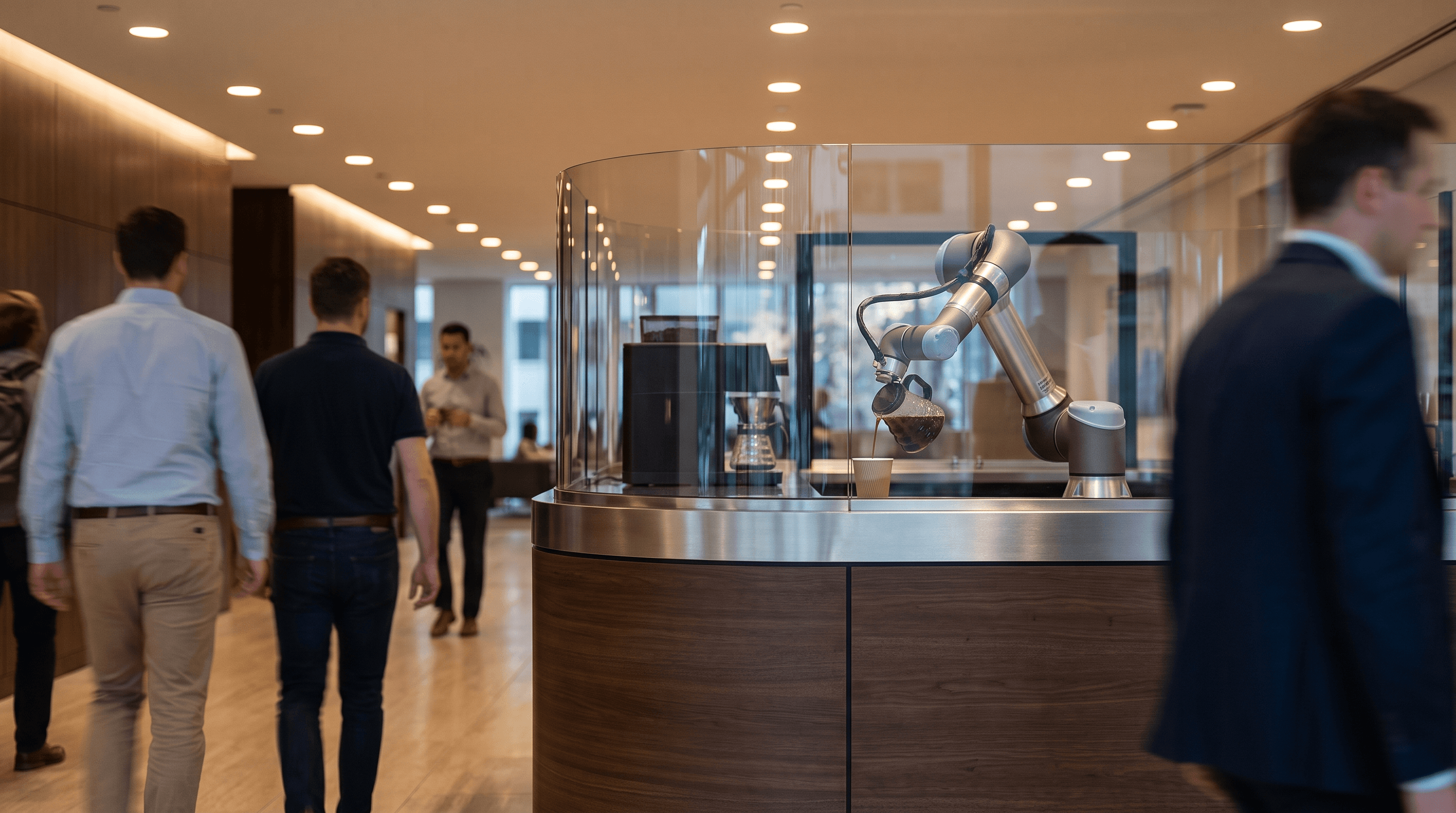
The product line covers four formats: smart canteens (a full unmanned-dining scenario on-site), snack vending automats (point sales of snacks and drinks), robotic noodle shops (an autonomous format cooking to traditional recipes), and barista robots (automated coffee-making points in an unmanned format). All four Xixiang solution formats are featured on the factory's catalog card.
Where this format pays off fastest
An unmanned dining format pays off particularly well either where per-square-meter rent is high (office towers, train stations, airports) or where demand is spiky and unstable and expensive to staff around the clock (student campuses, coworking spaces, night shifts at manufacturing sites). In both cases, a snack automat or a robotic point pays for itself not through lower per-portion cost, but by eliminating payroll for shifts with low utilization.
What to weigh before deploying
When choosing a format, the key figure isn't equipment cost itself but the projected daily order flow at the location — that's what determines whether an unmanned point pays off faster than staffing shifts, and which of Xixiang's four formats, from a snack automat to a full robotic noodle shop, matches actual demand at a specific site. Another factor worth weighing when evaluating the unmanned format is the feedback loop between analytics and the menu. In a conventional canteen, the decision to change the dish lineup is made by a chef or manager based on a subjective read of demand, often with a lag of weeks or months. Xixiang's analytics platform captures actual demand for every menu item and time slot in real time, letting the operator adjust the lineup faster and on data rather than intuition. For an operator running several locations, this also makes it possible to compare location performance directly, on identical metrics — something that, with staffed points, would otherwise require manually collecting and normalizing data from each site separately. A final practical tip: before rolling out a full smart-canteen format, it makes sense to test a simpler format first — a snack automat or a barista robot — at a specific location, so real analytics-platform data can confirm demand stability, and only then scale the investment up to a robotic noodle shop or a full unmanned canteen.