
гуманоидные роботы · робособаки · регулирование · UBTech · DeepRobotics
The US banned imports of Chinese humanoid robots and quadrupeds: what it means for buyers outside the US
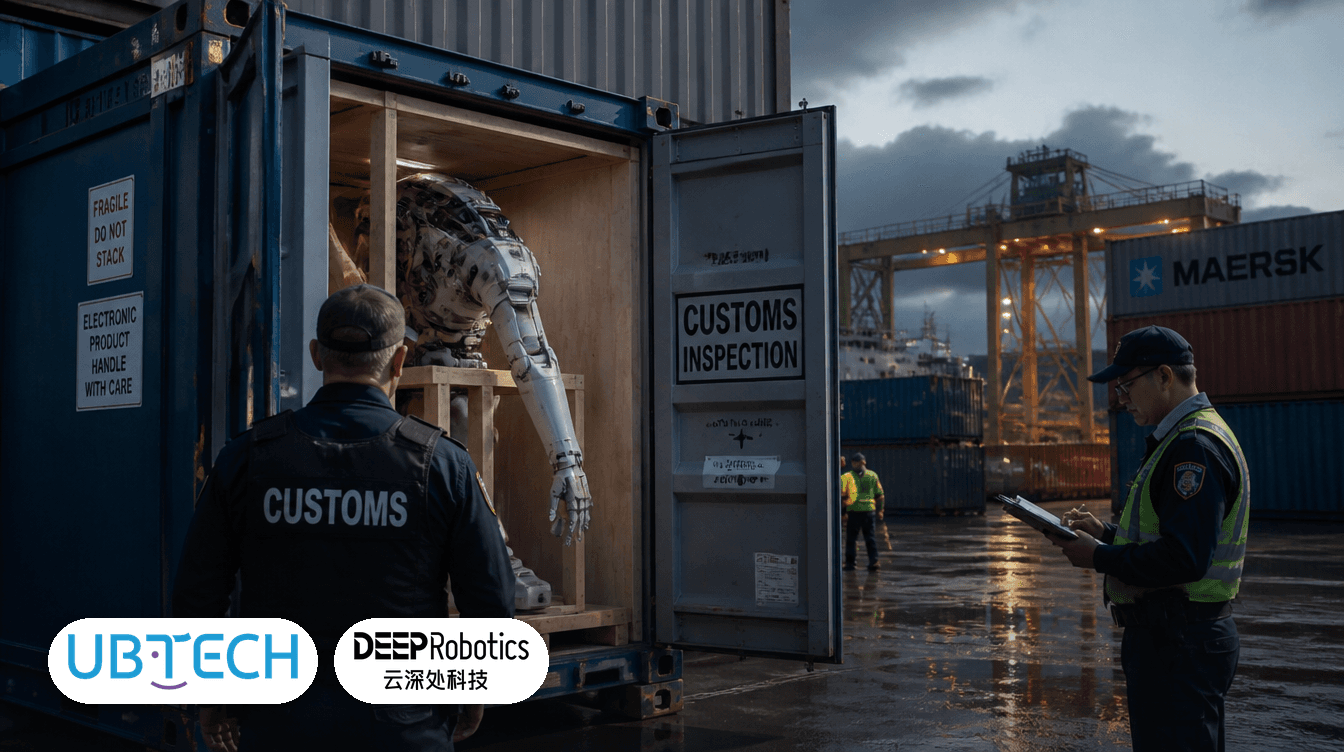
On July 29 the US Federal Communications Commission (FCC) banned imports of new humanoid and quadruped robot models manufactured in China. The stated reason: cybersecurity risks and supply-chain vulnerability from offshore production. Power inverters (used in data centers and energy systems) were bundled into the same rule — but robots got the headlines.
What was actually banned
The restriction covers new models — devices that haven't yet gone through FCC certification. Robots already purchased, or models the agency had already approved, aren't affected. This isn't a recall or an operating ban — it's a block on importing new units of new models into the US.
"Humanoid and quadruped" is literally the same category our catalog covers: UBTech's Walker S (a 36-servo humanoid) and DeepRobotics' X20/X30/Lite3 quadrupeds all fall under that definition, wherever they'd be sold in the US.
Why this isn't about us
China holds roughly 85% of the global humanoid robot market — the ban hits that share, but only within US borders. It doesn't touch shipments to Russia, the CIS, or anywhere else: this is a US import barrier, not a Chinese export restriction.
There's a flip side, too. Chinese manufacturers lose part of their demand from the world's largest market and will logically look for where to redirect production capacity and sales attention. For buyers outside the US, that likely means more room to negotiate, not less.
What actually changes
If some buyers used to treat US certification as a stand-in quality signal, that signal is now simply unavailable for new models, regardless of their actual quality. What's left is checking spec sheets and factory reputation directly, rather than whether a robot sells in the US.
This is exactly the case where an in-person factory visit outweighs any certificate. Footage from a real production line, a conversation with the engineer, testing the model in person — that settles the reliability question better than anyone's stamp of approval.
We keep taking clients to the MatrixRobotics, RobotEra, DroidUp, UBTech, and DeepRobotics factories as part of the Aura Robotics Tour — this news doesn't change that logic, if anything it makes the case a bit more concrete.
These factories are on the route of our Robotics Expedition — see them in person, not just on video.