
экспортные ограничения · гуманоиды · регулирование · США
The US closes its market to Chinese humanoids: what it means for an industry that holds 85% of the world
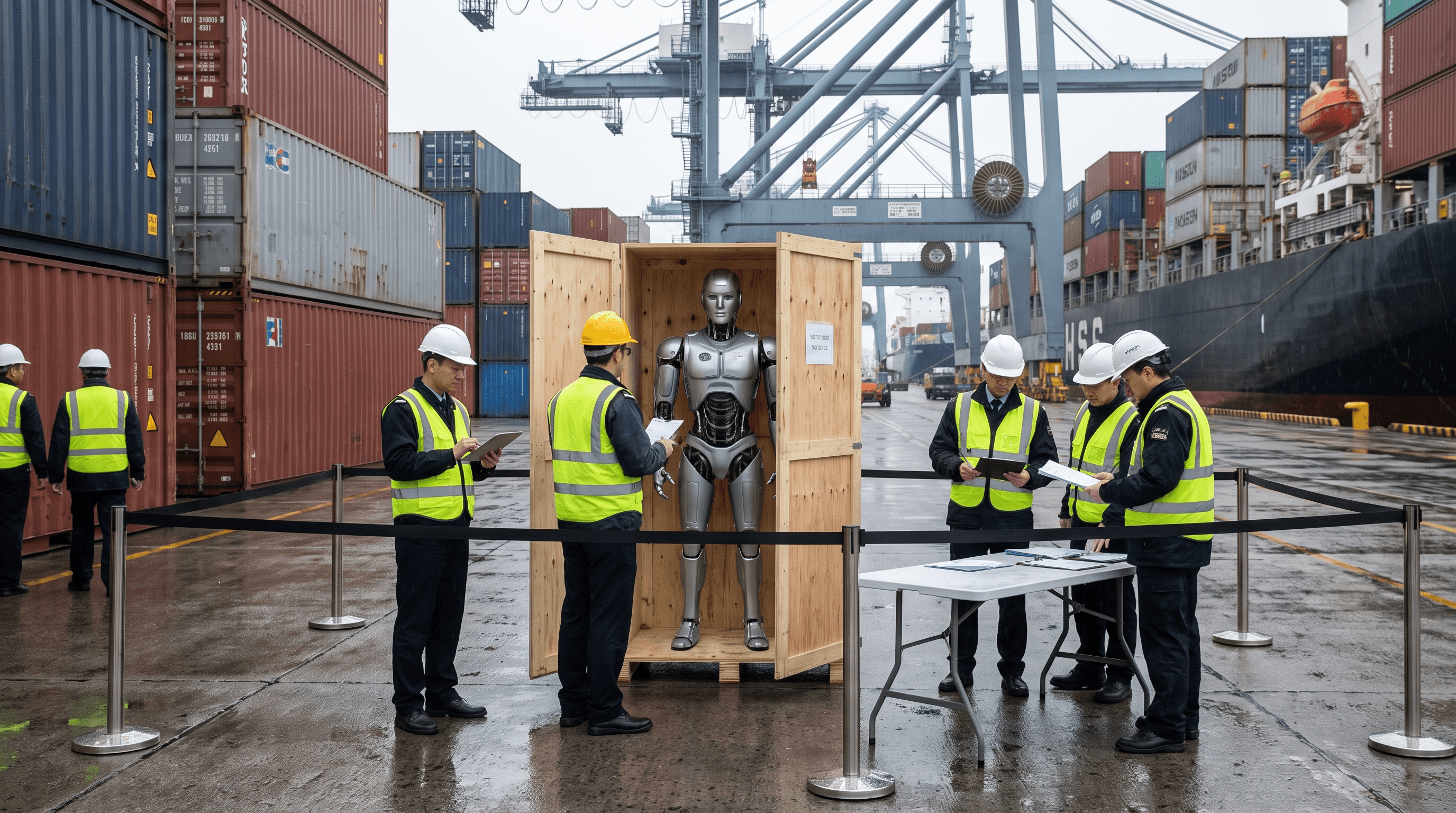
In late July 2026, the US Federal Communications Commission (FCC) announced a ban on imports of new foreign-made humanoid robots, robot dogs, and power inverters, citing national security risks, according to business media covering the decision. The wording doesn't name China directly, but the impact falls squarely on the Chinese industry — a country that, by various estimates, controls roughly 85% of the global humanoid robot market.
The logic behind the decision
The FCC's rationale rests on the argument that internet-connected devices manufactured abroad could theoretically be remotely controlled or used for surveillance by foreign governments, or become a vector for cyberattacks. The decision is based on a national security determination prepared by a White House-coordinated interagency body — meaning this is formally a regulatory measure, enforced through device certification, rather than a tariff.
Reaction and practical consequences
Beijing quickly labeled the decision protectionist. But behind the rhetoric lies a concrete economic problem: a country that supplies the overwhelming majority of the world's humanoid robots has suddenly lost access to one of its largest export markets. Available reporting indicates many Chinese manufacturers are already redirecting export efforts toward Europe as a priority destination instead of the US.
What it means for the industry as a whole
For Chinese manufacturers, the restriction is less a technological barrier — it targets imports of finished devices, not technology or component transfers — and more a logistical and commercial challenge: sales channels and geographic expansion priorities need rapid reorganization. Given that the domestic Chinese market already absorbs tens of thousands of humanoids a year, and demand from Europe and other Southeast Asian markets keeps growing, losing one market is a painful but not existential blow for an industry that has, for the past two years, grown primarily on domestic demand anyway.
A catalog of Chinese robot manufacturers, including those exporting abroad, is available on the Aura Robotics site.