
оаэ · дубай · сервисные роботы · госзаказ · полиция
UAE: Dubai's police robots and the state bet on service automation
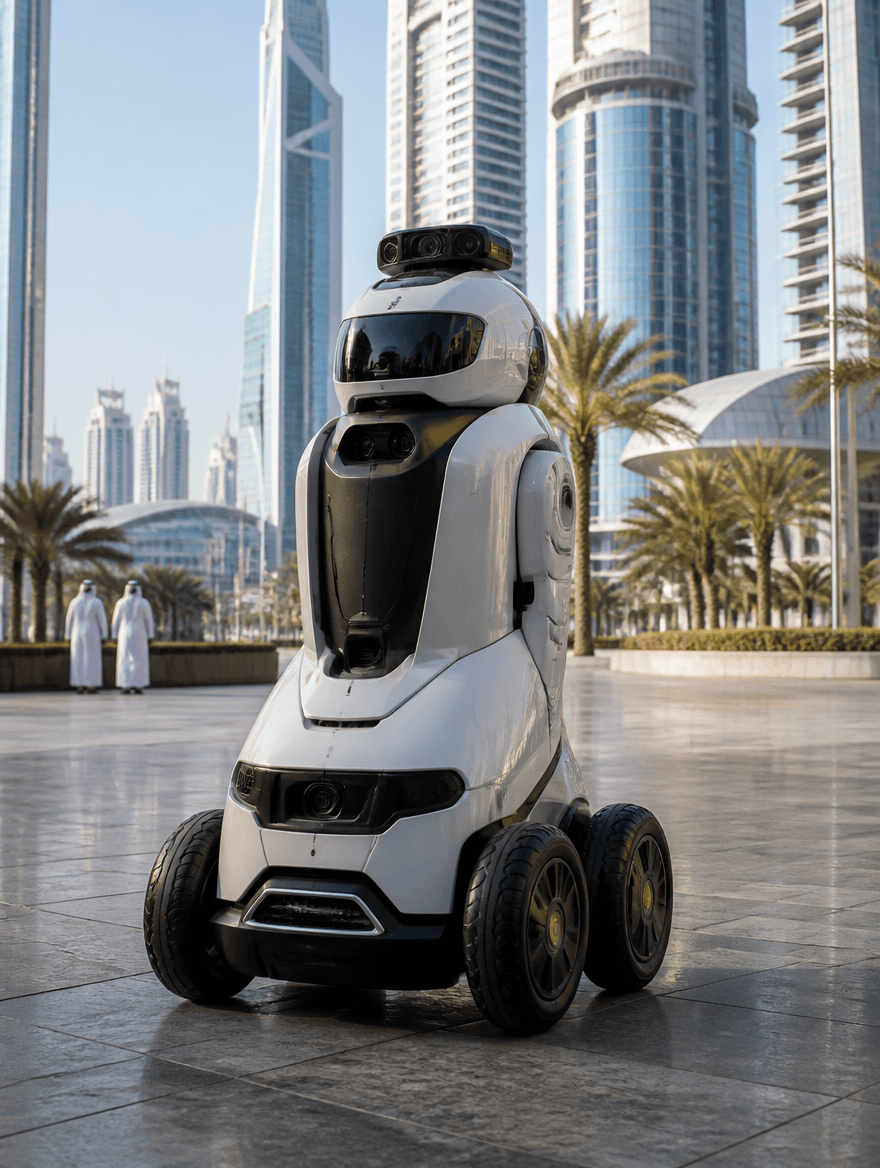
Dubai Police first rolled a patrol robot onto the streets back in 2017, and since then it has never been a one-off publicity stunt but a continuously updated lineup. By 2026 the city has integrated several generations of robots that function as mobile complaint-filing kiosks and patrol units for pedestrian zones like the Dubai Marina waterfront and tourist clusters around Burj Khalifa. The robot can process fines, advise tourists in several languages, and stream camera feeds to a dispatch center — routine but visible work that used to fall to a human staffer at a desk.
Why Dubai became the testing ground
The core reason isn't technological exoticism but the emirate's institutional readiness to test new services without lengthy approval cycles. Dubai Police works alongside the Dubai Future Foundation and local integrators, who get de facto status as an open-air laboratory: any city department can launch a robot pilot with municipal backing without years of regulatory review. It's the same principle applied to autonomous taxis and delivery drones — Dubai's authorities are deliberately building a reputation as a city where new automation gets tested faster than anywhere else in the Middle East.
The second factor is demographics. Expats make up over 80% of the UAE's population, and annual tourist arrivals run into the tens of millions, creating steady demand for multilingual service interfaces that don't tire the way shift-working reception staff do.
From police work to malls and airports
The logic of the police pilot has already spread to other segments. Dubai's shopping malls — Mall of the Emirates, Dubai Mall — run navigation robots for visitors, and Dubai International Airport is testing autonomous baggage carts and cleaning robots for night-shift terminal work. The pattern repeats: a state or quasi-state operator launches a pilot aimed partly at media impact, then private business copies the model if the economics work out.
Some caution on numbers is warranted here: there's no publicly available, precisely dated ROI data specifically for Dubai's police robots for 2025–2026, and payback estimates that circulate in the press usually refer to the emirate's broader digitalization program rather than to a single unit of hardware. What is confirmed is the scale of ambition: Dubai authorities stated targets in the mid-2020s to raise the share of robot-assisted patrols to a notable fraction of police shifts by the end of the decade, though there's no official confirmation these targets have been met as of 2026.
Who supplies the hardware
Dubai Police has traditionally sourced from a mixed pool of vendors — American and Japanese service-robot developers alongside Chinese mobile robot manufacturers, who offer more flexible customization for Arabic-language interfaces and the region's climate. That climate specificity (outdoor temperatures exceeding 45°C in summer, demanding reinforced electronics cooling) makes Dubai an interesting proving ground not just for showcase tasks but for engineering work on chassis and cooling systems later exported to other Gulf states.
What it means for the rest of the region
The UAE serves as a showcase for its Gulf neighbors — Saudi Arabia, Qatar, Bahrain — which closely watch Dubai's experiments before their own procurement decisions. For robotics vendors, that means a successful contract with Dubai Police or a municipal department works as a reference case for sales across the MENA region, where state buyers traditionally trust a neighbor's example more than a marketing deck.
Cybersecurity around such public-facing robots deserves separate attention. A police robot on a plaza isn't just a mechanical trolley — it's a node constantly transmitting video and location data to a dispatch center, and thus a potential entry point for an attack on city infrastructure. Dubai Police doesn't publicly disclose the details of its robots' security architecture, but industry sources indicate such contracts typically include a separate cybersecurity audit as a mandatory acceptance condition, which also lengthens the procurement cycle compared to an ordinary commercial service robot for a shopping mall.
For those who want to see which specific platforms sit behind such city pilots and which factories build them, our catalog of service robot manufacturers lets you compare specs and countries of origin.