
батареи · твердотельные батареи · энергетика · гуманоиды · технологии
Solid-state batteries: the promise versus the reality of technology readiness
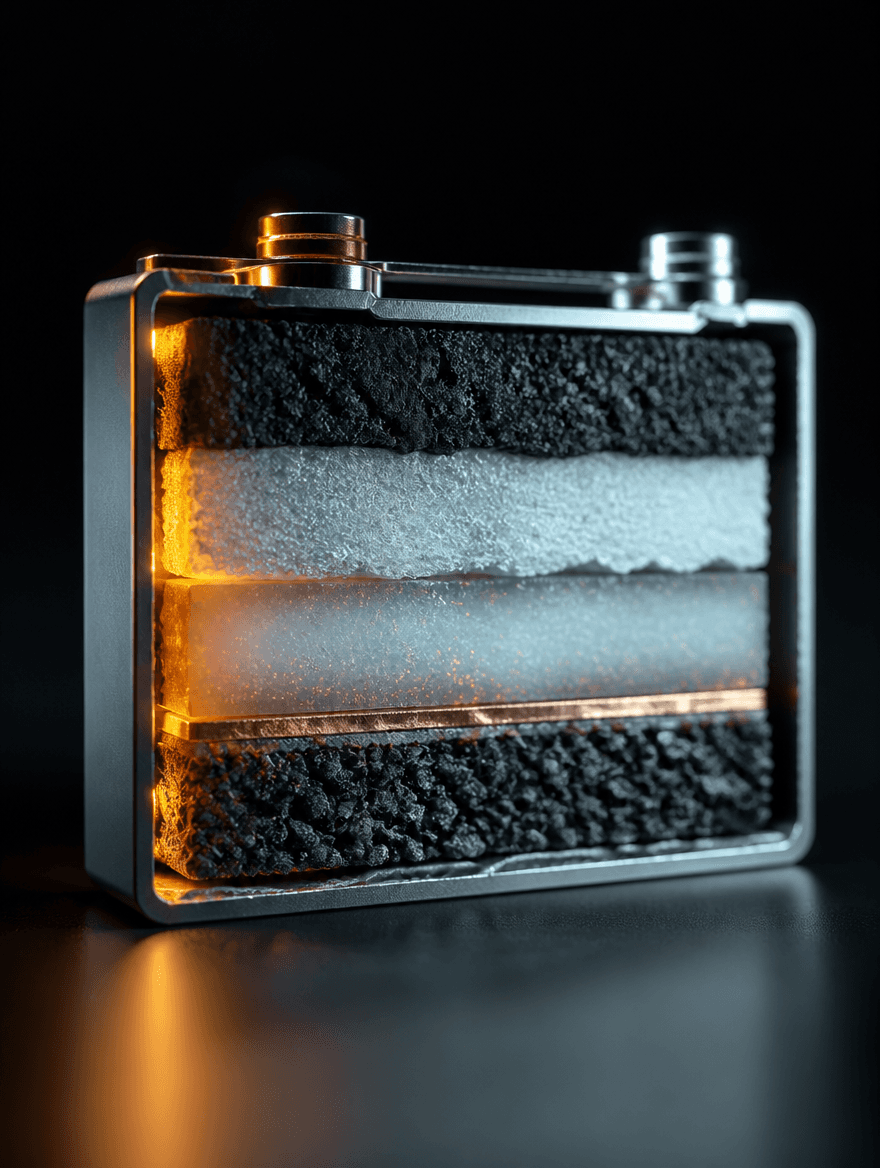
Every new humanoid robot presentation mentions solid-state batteries as the solution to the main physical constraint of bipedal robots — limited operating time on a single charge. A conventional lithium-ion battery with liquid electrolyte gives a humanoid one to two hours of active operation per charge, and boosting energy density would directly resolve the question of commercial viability: nobody wants a robot that needs charging more often than an employee needs a lunch break. The trouble is that years of honest engineering work sit between a presentation slide and mass shipment — and the battery developers themselves have started talking about that gap openly.
What "readiness level 4" actually means
CATL chairman Robin Zeng gave a rare, sober assessment for an industry executive in June 2026: solid-state battery technology currently sits at Technology Readiness Level (TRL) 4 of 9 on the widely used NASA-derived scale the battery industry has adopted to gauge chemistry maturity. Level 4 means lab-validated component functionality — scientists have shown a solid electrolyte can physically replace a liquid one and a charge-discharge cycle occurs — but several rungs remain before industrial production, where stability across millions of cycles at varying temperatures and mechanical loads is required: a pilot line, a trial batch, real-world validation, and only then mass production. Zeng explicitly assessed that mass adoption is unlikely before 2030.
Why it's so physically hard
The core engineering problem with solid-state batteries is contact between the solid electrolyte and the electrodes. In a liquid electrolyte, lithium ions move freely through a solution that fills every microscopic irregularity on the electrode surface. In the solid state, that job depends on physical contact between two solid materials, and any microcrack, any material expansion during a charge-discharge cycle, creates a gap that sharply raises internal resistance and shortens battery life. It's this problem — not a lack of suitable electrolyte materials (sulfide and oxide compositions have been known for decades) — that keeps the technology stuck at lab scale.
How humanoid makers are responding
XPeng, which initially announced fully solid-state batteries for its Iron humanoid, was forced to switch to hybrid cells to keep its mass-production schedule intact. That's a telling signal: even a company with direct access to cutting-edge battery development (XPeng invests heavily in its own battery technology) chose a temporary compromise over pure technological ambition rather than miss delivery deadlines to customers.
What this means for buyers and investors
Talk of solid-state batteries in humanoid presentations should be read as a statement of development direction, not a spec of a product buyable in the next year or two. For a corporate buyer selecting a humanoid for a specific task today, the practical takeaway is simple: plan operations around current lithium-ion or hybrid cells and their actual runtime, not marketing promises about next-generation technology. Investors should treat any claim of an "imminent" shift to solid-state solutions before 2029–2030 with skepticism — industry leaders themselves, including CATL, aren't publicly promising earlier timelines.
Hybrid cells as a stopgap
XPeng's shift to hybrid cells deserves a separate note, since the term gets used loosely in marketing materials. In practice, a hybrid cell usually means a semi-solid electrolyte — a gel-like composition with partial replacement of the liquid phase by solid or polymer components — delivering part of the benefit of fully solid-state technology (higher energy density, somewhat better thermal stability) without fully abandoning the liquid phase, which still ensures reliable contact with the electrodes. It's a sensible engineering compromise, but it shouldn't be confused with the "true" solid-state batteries referenced in the long-term roadmaps of CATL and other manufacturers.
Who else is tackling the electrode-contact problem
Besides CATL, South Korea's Samsung SDI and LG Energy Solution, along with Japan's Toyota — historically regarded as a pioneer in solid-state battery research for the auto industry — are working on the same electrode-contact problem. As of late 2025 through early 2026, none of these companies has publicly claimed readiness for mass production before the end of the current decade, which broadly supports reading Robin Zeng's assessment as an industry consensus rather than an overly pessimistic stance from a single company.
Current humanoid models and their real technical specs can be found in our manufacturers catalog.