
инвестиции · Сингапур · складская робототехника · ЮВА
Sharpa raises $670 million: how Singapore is becoming warehouse robotics' financial hub
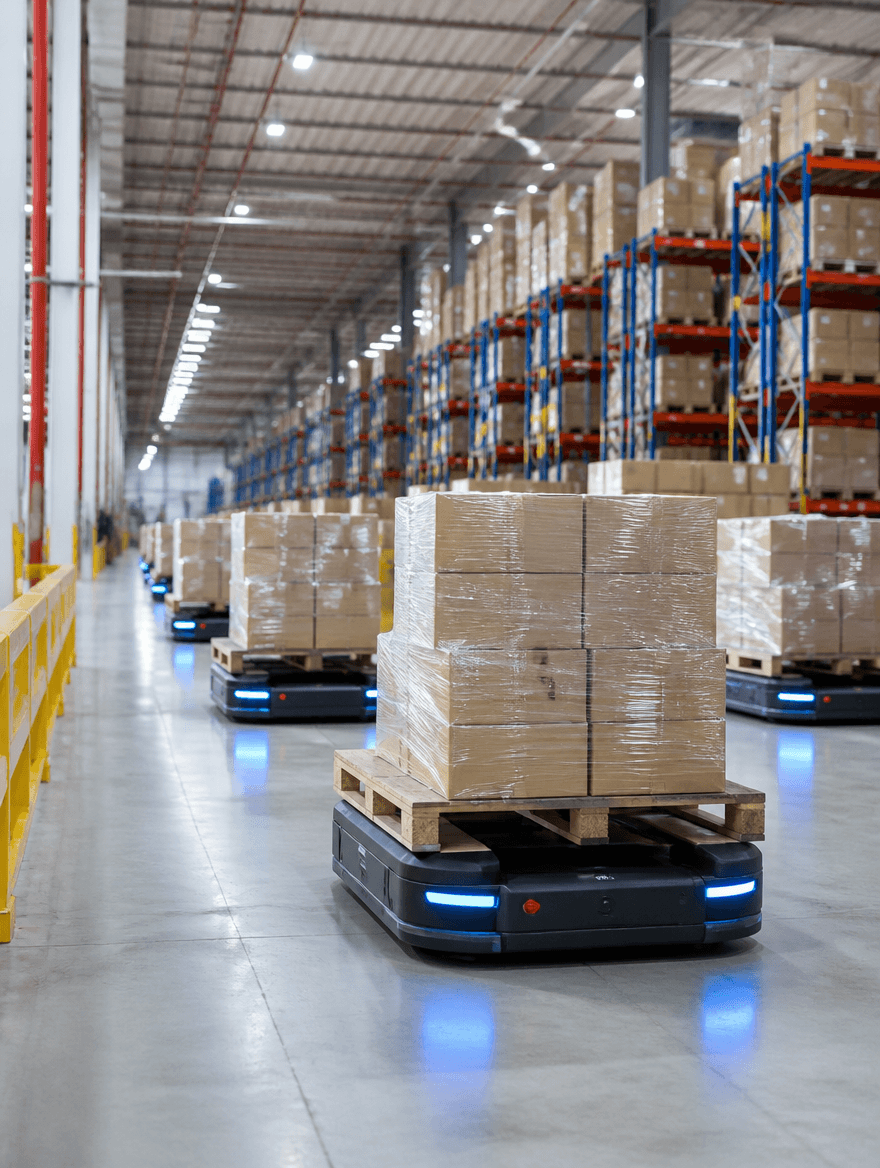
Sometimes a single funding round is enough to rewrite an entire region's statistics. That's exactly what happened in August 2026, when Singapore-based Sharpa closed a $670 million Series D round — and with a single stroke made that month the largest ever for warehouse robotics investment across all of Southeast Asia.
One round that rewrote the regional record
The scale here is easiest to grasp through comparison. Southeast Asia has already raised $696 million in robotics investment since the start of 2026. For comparison, in 2021 the entire regional industry raised just $10.2 million — meaning capital volume grew nearly 70-fold in under five years, with the lion's share of that jump coming from this single Sharpa round.
Such concentration of capital in one deal isn't an anomaly — it's typical of a young, fast-growing market: once investors find a company convincingly demonstrating a scalable model, money doesn't arrive gradually, it arrives all at once and in large amounts, racing to secure a position before the market consolidates.
A financial hub, not a manufacturing base
The geographic logic here is even more interesting. The robots themselves, ferrying pallets around Southeast Asian warehouses, are still mostly assembled in China, where mechanical, electronic, and mass-manufacturing competencies are concentrated. But the capital funding their purchase and the software built around them is increasingly concentrating in Singapore instead.
That division of roles makes sense for a city-state with developed financial infrastructure, an English-language jurisdiction convenient for international investors, and status as a regional headquarters hub for dozens of global corporations. Singapore isn't trying to compete with China on manufacturing — it's carving out a niche in financing and coordinating regional robotics expansion.
Why the money is flowing into warehouses specifically
Warehouse automation is one of the robotics segments investors understand most easily, because return on investment is straightforward to calculate. Unlike general-purpose humanoids, where deployment economics remain largely hypothetical, a fleet of autonomous mobile robots in a warehouse solves a concrete, measurable problem: shorter order-fulfillment time, fewer errors, less dependence on hiring line staff as labor gets more expensive alongside growing economies in Vietnam, Indonesia, and Malaysia.
That transparent economics makes warehouse robotics a comfortable first step for institutional investors who remain cautious about more speculative bets on general-purpose humanoids.
What's next for the region
It's too early to say Southeast Asia will catch up with China's manufacturing volume — the industrial-base gap is too wide to close in a year or two. But the region's role as a financial and integration hub is becoming increasingly clear: money is flowing in, regional headquarters for companies like Sharpa are registering here, and robotics expansion into neighboring countries — Vietnam, Indonesia, Thailand, where growing manufacturing capacity from global electronics brands creates steady automation demand — is being coordinated from here.
The Sharpa round should be read not as a one-off sensation but as an indicator of a structural shift: capital in global robotics is becoming more geographically distributed, and Singapore clearly intends to hold one of the key roles in that new geography.
The race for regional-hub status is only starting
It's worth keeping in mind that Singapore isn't competing for the role of regional robotics finance and coordination hub in a vacuum. Malaysia, Indonesia, and Vietnam are actively offering their own tax incentives and special economic zones to attract manufacturing capacity and tech-company headquarters onto their soil. Singapore currently holds an edge in financial-infrastructure sophistication and regulatory predictability, but as neighboring countries build up their own manufacturing and engineering competencies, competition over exactly where capital and industry headquarters concentrate could intensify.
For Sharpa and similar companies, that means Singapore's current lead as a financial hub shouldn't be treated as a given forever — it's more of a temporary window of opportunity the company needs to use to lock in its position before competition for regional status heats up.
Profiles of companies working in warehouse and logistics robotics across Asia can be found in the manufacturer catalog on the Aura Robotics website.