
индонезия · никель · автоматизация · промышленность · батареи
Indonesia and nickel: an unlikely resource driver of robotics
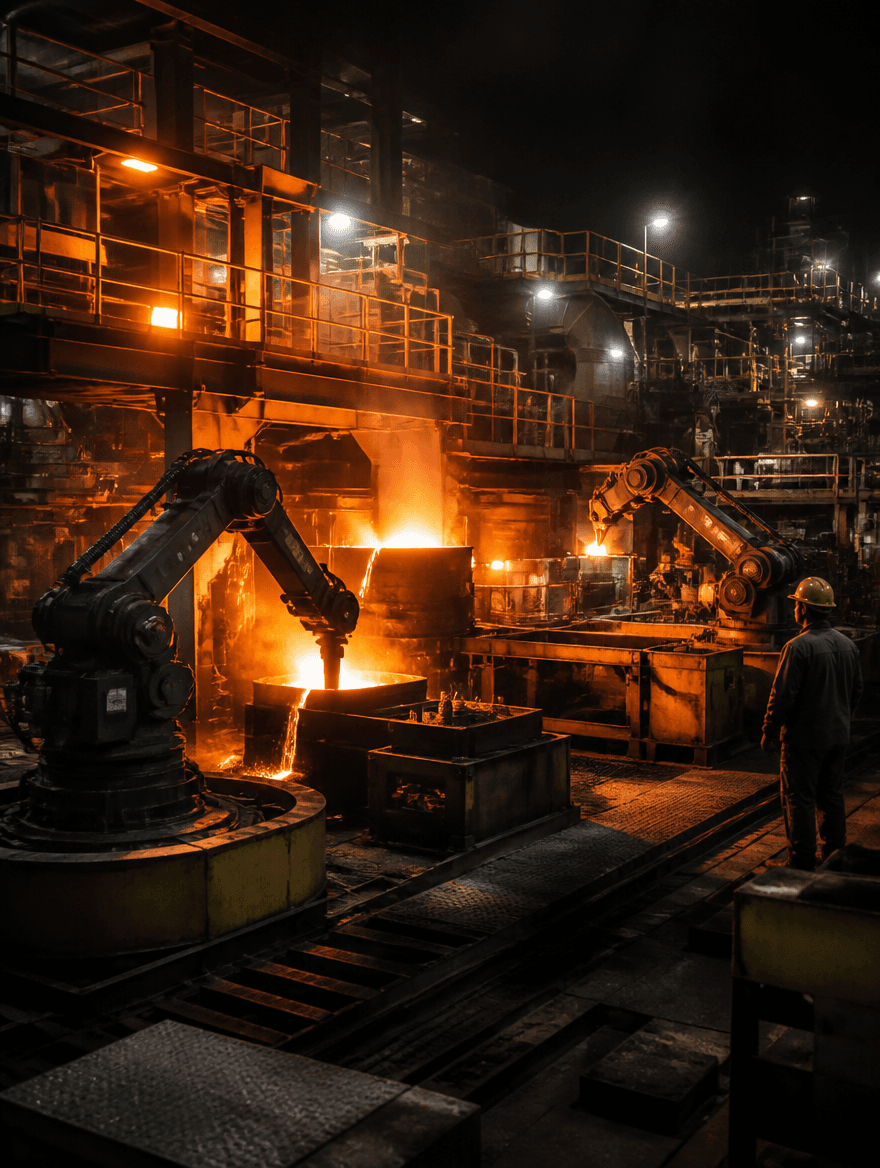
Stories about a country's robotics development usually start with startups, AI investment, or a government digitalization strategy. Indonesia's case is different: the main driver of automation in the country isn't a technology strategy — it's a raw material. Nickel, to be precise.
The ban that changed everything
Indonesia is the world's largest nickel producer, a key raw material for lithium-ion EV battery cathodes. Just a few years ago, the country exported a significant share of mined ore in raw, unprocessed form — meaning it sold the raw material while all the value added by processing went to other countries, chiefly China.
Indonesia's government policy broke that model: the country banned raw nickel ore exports, forcing foreign and local investors to build smelters directly inside the country if they wanted to keep processing Indonesian nickel. It's a classic case of industrial policy through an export ban — a model other resource-exporting nations have tried, though not always with this result.
Why this specifically led to robotization
Nickel smelting is an extremely capital-intensive and physically hazardous industry: extreme temperatures, work with molten metal, toxic ore-processing byproducts. That specificity makes smelters a natural candidate for automation — where manual labor isn't just costlier but outright dangerous, robotization stops being an option for cutting costs and becomes a safety requirement as well as an efficiency one.
When the government ban forced investors to build smelting capacity specifically in Indonesia rather than process ore elsewhere, those same investors automatically brought along both capital and automation technology for the plants themselves. Automation, in other words, arrived in the country not as a standalone government initiative but as a side effect — an inevitable one — of industrial policy originally aimed at a completely different goal: keeping processing value-add inside the country.
The scale of Indonesia's automation market
Indonesia's industrial automation market is valued at $80.8 billion in 2025, forecast to grow to $167 billion by 2032 — meaning the market is expected to roughly double in a little over seven years. An important caveat, though: 80 to 90% of industrial robots in the country are imported. Indonesia is automating fast, but almost entirely on foreign equipment — Chinese, Japanese, Korean — making it a large consumer market for Asian robot manufacturers rather than an independent technology player.
The broader lesson
Indonesia's case is a good illustration of an important point: a country's automation doesn't necessarily follow from a deliberate technology strategy — it can be a byproduct of entirely different decisions. Indonesia isn't automating because it decided to become a tech power; it's automating because it decided to stop selling raw ore. A government policy aimed at retaining processing value-add accidentally (or not entirely accidentally) created one of the fastest-growing industrial automation markets in Southeast Asia.
This pattern is worth keeping in mind when analyzing other resource-exporting economies: where a government restricts raw material exports and requires local processing, and that processing is physically hazardous or capital-intensive, automation often follows automatically, regardless of whether that was the original goal.
Where the market goes from here
Indonesia's automation trajectory going forward will likely depend directly on global nickel prices and on whether the EV industry keeps growing its demand for battery raw materials. If nickel demand stays high, the flow of investment into smelting capacity will continue, and with it demand for industrial robots on the most hazardous production stages. That creates a peculiar dependency for the country: Indonesian robotics is growing not on the back of a diversified technology sector, but in the wake of a single commodity industry, making it more exposed to swings in the global battery-metals market than the robotics markets of neighbors with a broader industrial base.
For manufacturers and automation suppliers eyeing Indonesia as a growing sales market, Aura Robotics' catalog collects vetted industrial robotics manufacturers from the region.