
гуманоиды · roi · автоматизация · инвестиции · промышленность
The ROI matrix: when a humanoid pays off and when ordinary automation is enough
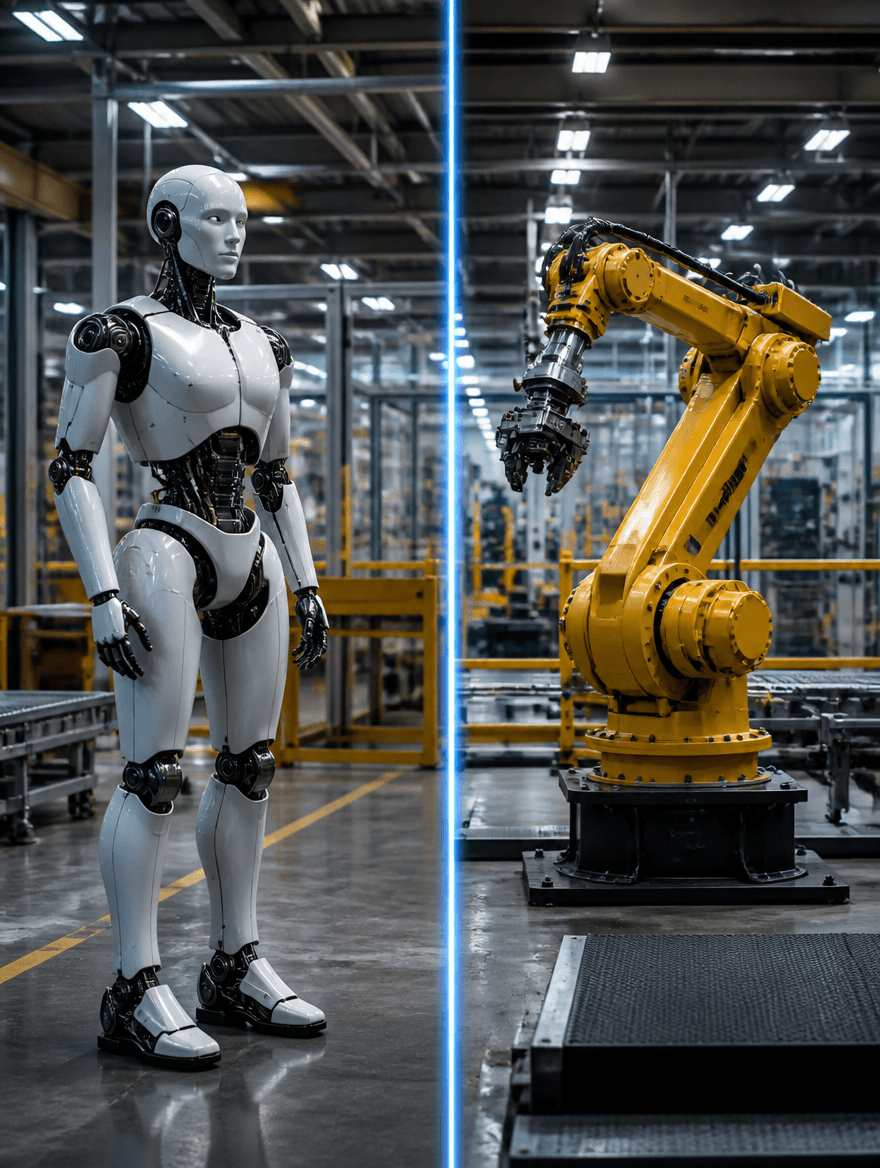
Humanoid robotics marketing loves the phrase "a robot that can replace a human anywhere" — and that's exactly where the main trap in a purchasing decision lies. A humanoid's versatility is a real engineering achievement, but it comes at a cost: as of 2025–2026, serial-production humanoid pricing from leading Chinese manufacturers starts around $20,000–$30,000 for base models and climbs considerably higher for platforms with advanced manipulation, whereas a specialized industrial arm built for one specific task can cost a fraction of that while being noticeably more reliable at that particular job.
When conventional automation wins
If the task is static, repetitive, and doesn't require moving between different work zones — welding the same seam thousands of times a day, stacking identically sized boxes onto a pallet — a classic industrial manipulator or a simple conveyor almost always wins on economics. Such equipment has been operated for decades, its certification is well-established (unlike humanoids, which we've covered separately), parts and service are available everywhere, and payback across most high-volume manufacturing steps falls within reasonable, predictable timeframes. A humanoid in this scenario is an oversized, pricier way to solve a problem that's already solved.
When the logic flips in a humanoid's favor
The picture reverses where the environment is variable and the volume of any single operation is too small to justify a dedicated line for it. The classic example is warehouse logistics with a constantly shifting mix of differently shaped and sized items: building a separate conveyor for every new SKU isn't cost-effective, while a humanoid with a general-purpose manipulator and computer vision can switch between tasks without physically retooling the line. Similar logic applies at sites with irregular schedules — cleaning spaces of varying layout at different times of day, patrolling and inspecting production floors where the route and task set change day to day.
Another scenario favoring humanoids is where the workspace was originally designed for people and it's physically expensive to retrofit for a conveyor: older warehouses, buildings with narrow corridors and staircases, spaces where converting to rigid automation would require major renovation. A humanoid's anthropomorphic form fits into such environments without reworking the infrastructure.
The hybrid scenario is the most common in practice
In practice, corporate buyers rarely choose purely between a humanoid and a conveyor — a combination is more common: dedicated automation covers high-volume repeatable operations, while humanoids handle the flexible tail of tasks too varied or too infrequent to justify a standalone solution for each. That's what most humanoid pilot deployments at manufacturing sites looked like in 2025–2026 — not a wholesale replacement of existing lines but closing bottlenecks previously solved only by manual labor.
A practical decision matrix
Before purchasing, it's worth explicitly answering three questions: how repeatable is the task (high repeatability argues against a humanoid), how large is the volume of a single operation (low volume across varied tasks argues for a humanoid), and how expensive would it be to physically retrofit the space for rigid automation (expensive argues for a humanoid). The answers are rarely clear-cut, and that's exactly why rushing to buy the most impressive platform without an honest analysis of the task is a common mistake when first encountering the humanoid market.
Hidden cost lines buyers often forget
When calculating ROI, buyers often stop at the robot's own price tag and overlook hidden cost lines: staff training on new equipment, downtime during rollout, service contract and parts costs, and for humanoids specifically, the legal costs of certification we've covered separately. A realistic ROI model should build in these lines from the start, not treat them as unforeseen expenses that surface only after the supply contract is signed.
You can compare specs and typical use cases across different robot classes in our catalog.