
гуманоиды · Китай · медтех · робототехника
Fourier GR-3: the humanoid that grew out of rehabilitation exoskeletons
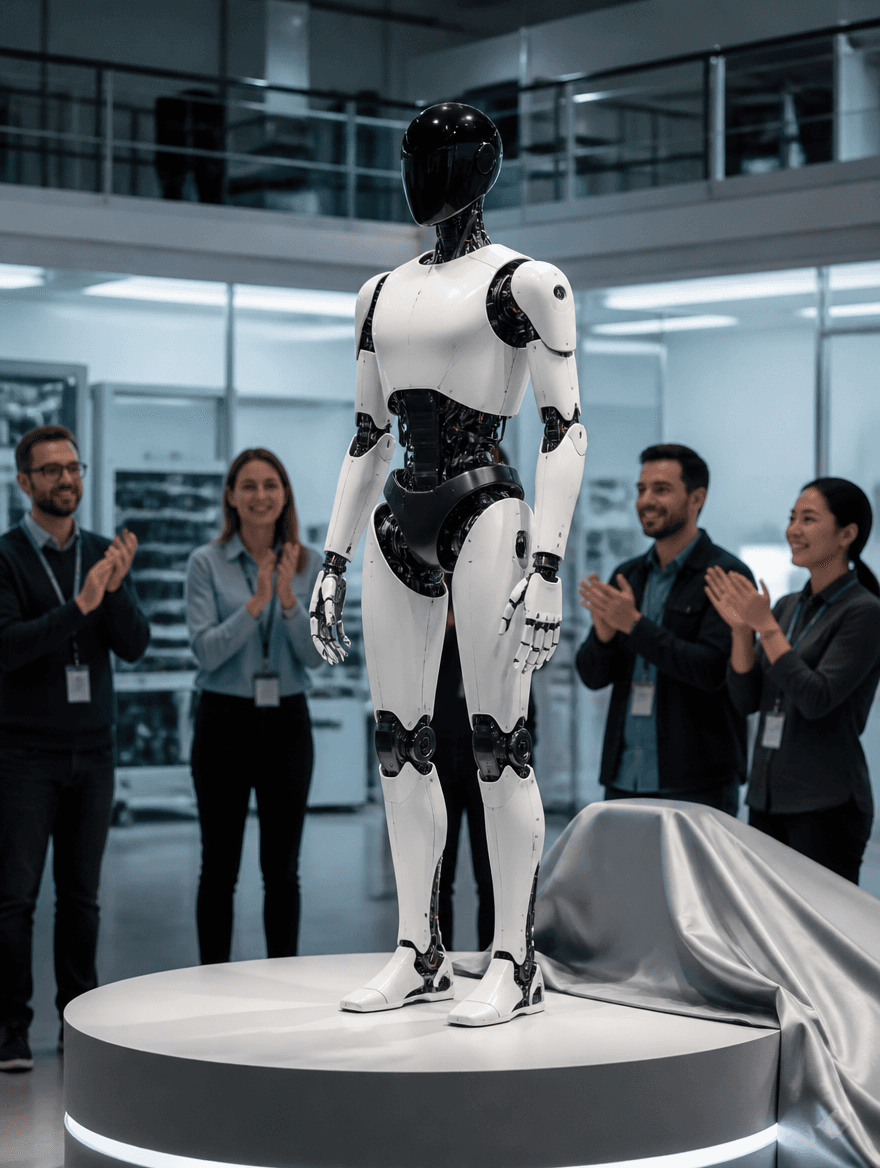
Every time another Chinese startup unveils a new humanoid, the first question is usually: what can it do that the previous twenty couldn't? With 傅利叶智能 / Fourier Intelligence, the answer is more interesting than "it runs faster" — because the company's whole trajectory differs from the classic "build a robot that does flashy backflips" playbook.
From stroke rehabilitation to industrial assembly
Fourier Intelligence didn't start out chasing a robot-of-the-future ambition. It started with a far more grounded and human task — rehabilitation exoskeletons that help patients recover after a stroke. Years spent figuring out how to move a damaged human limb carefully, predictably and safely gave the company something no funding round can buy: deep expertise in biomechanics of motion close to people.
That background sits behind the new generation of its GR humanoid line, including the model the company continues to develop as GR-3. While a large chunk of the industry competes over who can sprint fastest or land the most impressive backflip on a trade-show stage, Fourier has deliberately invested elsewhere: smoothness, predictability, and safety of motion where a robot operates literally half a meter from a human being.
Why gentleness is engineering too
"Lift a 20-kilogram box" sounds trivial until you have to do it next to an elderly person, a hospital patient, or a factory worker who shouldn't have to doubt their safety for even a split second. What matters there isn't peak actuator power — it's precise force control, the ability to sense resistance and instantly correct the trajectory.
That is exactly the competency Fourier spent years honing in the medical segment: an exoskeleton helping someone relearn how to walk simply cannot afford sudden, unpredictable movements. Carrying that experience over to a full-size humanoid turns what looks like a niche medical specialization into a real competitive edge wherever the job calls for care, assistance, and close physical contact with people rather than raw strength.
The first commercial contract as a stress test
Demo clips of robots pouring coffee with flair stopped impressing anyone a while ago — the humanoid industry churns out dozens of them every week. The far more meaningful milestone is the jump from a stage trick to actual commercial deployment, where a client pays not for a polished presentation but for a concrete result at a concrete site: shift after shift, without an engineer hovering nearby with a laptop.
That transition is the real test for the new GR generation: can a robot trained for gentleness in a medical context sustain the pace and repeatability of industrial or service operation. It's a fundamentally different challenge from showing off dexterity on an exhibition floor — here component reliability, software-stack stability, and long-term cost of ownership move to the front of the queue.
What this means for the market
The humanoid industry increasingly resembles the smartphone market at its mature stage: the winner isn't the one with the flashiest chassis, but the one that has carved out a durable niche around genuine competence. Fourier's niche is exactly where many competitors fall short — biomechanics of motion that is safe for humans. It's a narrow but heavily in-demand specialization: China's aging population and rising demand for assistive robotics create a market that doesn't necessarily need a robot that can dance.
For the industry, that points to a gradual differentiation: some companies will keep racing on speed and payload, others on gentleness and safe human interaction. Fourier already had a head start in the latter, and the new GR generation is an attempt to convert that medical heritage into a position across the much broader market of service and industrial humanoids.
Competing for aging markets
There's a broader demographic context to this story too. China, Japan, and South Korea are all going through rapid population aging simultaneously — meaning demand for assistive robotics will keep growing regardless of how impressive any given humanoid looks on an exhibition floor. For Fourier, this isn't an abstract trend pulled from an analyst report, it's a direct continuation of the business the company has run since its founding: helping people with limited mobility, whether a post-stroke patient or an elderly person who simply needs help around the house.
That's why Fourier's entry into full-size humanoids reads less like a random product-line extension and more like a logical continuation of a trajectory the company already chose. Competitors entering this same market without years of biomechanics experience will have to either buy that expertise by acquiring a specialized team or spend years building it themselves — and time in this industry right now may be an even scarcer resource than capital.
Anyone tracking which manufacturers and component suppliers are shaping this ecosystem can browse the robotics manufacturer catalog, which covers companies across Asia, including specialized niches like medical and assistive robotics.