
чипы · инвестиции · Китай · технологии
D-Robotics and the Sunrise chip: humanoid competition moves inside the chassis
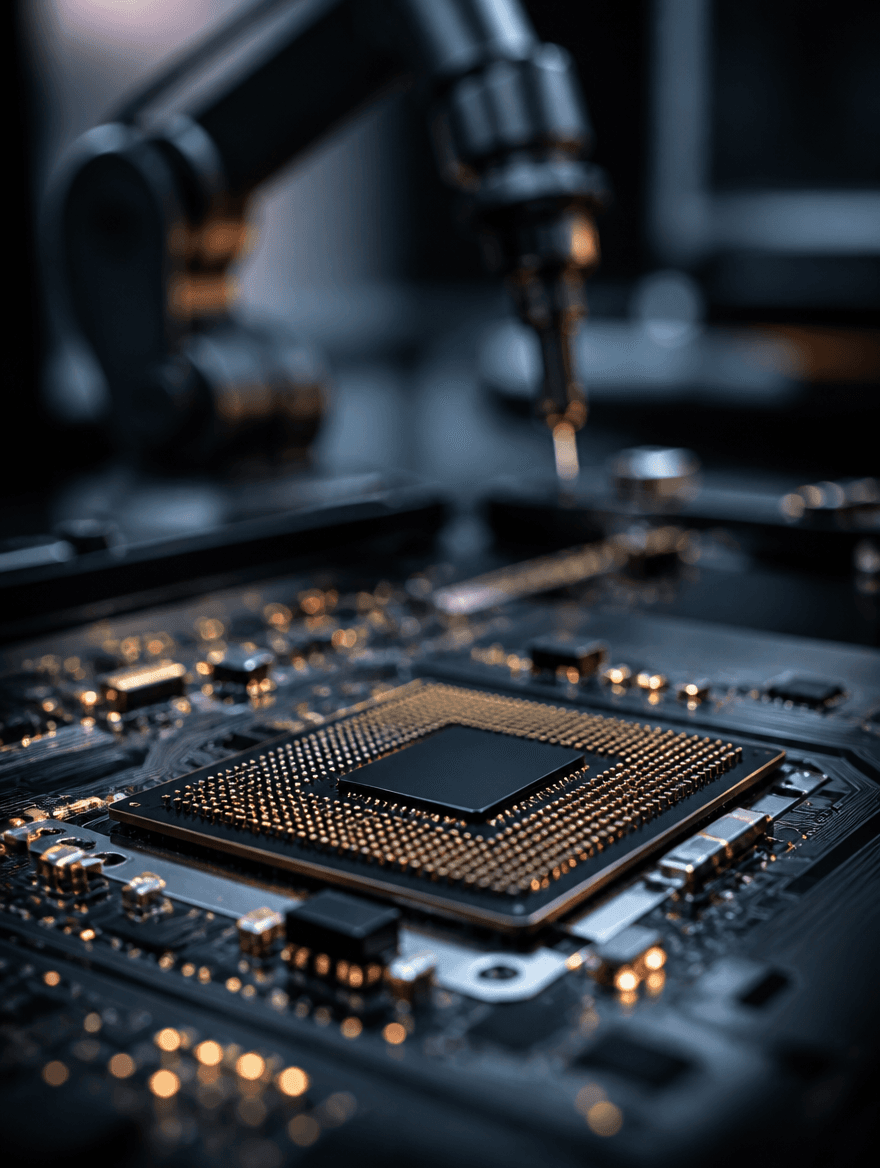
One of the more telling recent deals in Chinese robotics involves a company that doesn't make a single robot. D-Robotics closed a Series C round worth $400 million — and what it actually builds are chips and a software platform that other companies' robot bodies "think" with.
A business without a single chassis
That alone is a signal of where competition in the industry is shifting. D-Robotics isn't racing UBTech or Fourier over whose humanoid looks more impressive on stage — it supplies the computing infrastructure that those and other companies build their own products on top of. The company's flagship chip, Sunrise, has already shipped more than 8 million units — not a nice number from a slide deck, but real volume flowing into active production lines, from automotive ADAS systems to robotics platforms.
A lesson from the smartphone playbook
What's happening with robot chips strikingly echoes what happened with smartphones a decade and a half ago. Early on, every manufacturer tried to design its own silicon from scratch, but the market eventually consolidated around two or three chip vendors, and competition shifted to chassis design, cameras, and the software layer sitting on top of a shared hardware base.
A similar dynamic could well play out in robotics: instead of dozens of companies each expensively reinventing their own vision and motion-control chips in parallel, the industry may gradually move toward a model where a handful of specialized suppliers like D-Robotics own the compute layer, while robot makers focus on mechanics, integration, and applied software.
A link in the chain, not an all-in-one player
Tellingly, D-Robotics isn't trying to own the entire humanoid value chain by itself. The industry is increasingly described as a chain of specialized links: D-Robotics supplies the computing platform, UBTech provides the chassis and assembly capacity, Fourier contributes biomechanics expertise. None of these companies claims a monopoly on the whole stack — and, judging by other mature tech markets, that kind of vertical disintegration tends to accelerate an industry's growth faster than any single company trying to control everything on its own.
Export as the next frontier
A logical continuation of domestic success is taking a computing platform like Sunrise into external markets. For a robot buyer outside China, what matters more than the chassis brand is which compute and sensor platform sits inside it — that determines compatibility with existing software stacks, availability of updates, and predictability of component supply for years ahead.
That's why exporting chips and computing platforms is becoming just as significant an indicator of Chinese robotics' maturity as exporting finished robots. A company whose components sit inside devices from dozens of different manufacturers worldwide occupies a far more durable market position than a maker of a single humanoid model dependent on the next design trend.
What this means for buyers and integrators
For companies choosing a robotics platform to deploy — whether in a warehouse, a factory, or a service business — the D-Robotics round is a reminder: when evaluating a robot, look beyond appearance and headline motion specs, and check which compute platform sits inside and how mature its developer ecosystem is. That layer determines how quickly a supplier can fix bugs, extend functionality, and keep supporting the device throughout its service life.
A cautionary example that also inspires competitors
D-Robotics' $400 million round should also be read as something of a wake-up call for robotics companies still trying to develop the compute chip, the sensor stack, and the chassis mechanics all in-house on their own. That strategy demands enormous capital expenditure and stretches the development cycle out over years, while a specialized supplier like D-Robotics can already offer a ready, field-proven solution across millions of devices, right now. For many companies, it's more rational to focus on what they're actually good at — mechanics, integration, a specific application scenario — and buy the compute layer from a specialized supplier rather than reinvent it.
At the same time, that same logic spurs on D-Robotics' own competitors: if the market for robotics compute platforms really is turning into something like the mobile SoC market, a share of it could be worth far more a few years out than today's $400 million funding valuation suggests.
To understand which components and compute platforms sit behind specific robot manufacturers, browse the robotics manufacturer catalog on the Aura Robotics website.