
коботы · промышленная автоматизация · рынок роботов
China's cobot market: 60,000 robots in 2026 and near-total displacement of foreign brands
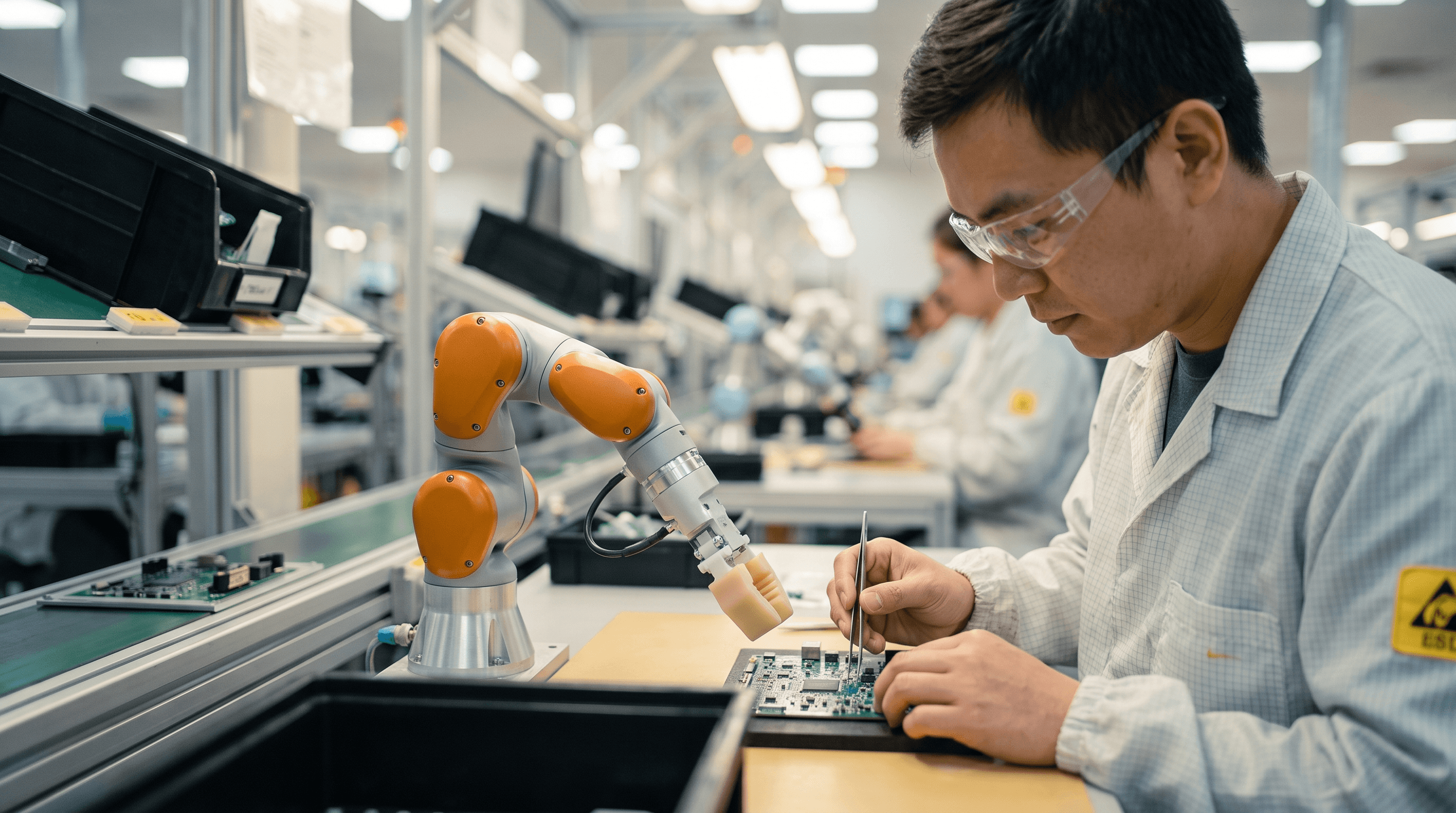
According to industry reviews published by robot.gkzhan.com and other trade platforms, collaborative robot sales in China will exceed 60,000 units in 2026, with market volume reaching about 2.9 billion yuan — up 45.6% year over year. The long-term forecast is even more aggressive: annual sales volume is expected to reach 190,000 units by 2030. Against the backdrop of other industrial equipment categories, where double-digit growth already counts as a strong result, this pace marks cobots as one of the fastest-growing segments of Chinese robotics.
Who holds the market
The key detail in this statistic isn't the growth figures themselves but the market structure: domestic brands control over 90% of collaborative robot sales in China. That fundamentally distinguishes this segment from many other industrial equipment categories, where imported brands still retain a notable share. Among domestic leaders, industry reviews cite AUBO Robotics and Elite Robots — companies competing aggressively on price, displacing not only each other but foreign players like ABB's Yumi.
Who's buying cobots and why
The main demand driver is electronics and semiconductor manufacturing: producers are increasingly deploying cobots for precision assembly, quality control, and labor-intensive operations that need accuracy but not the hundreds-of-kilograms payload capacity of an industrial arm. Government programs like "Made in China 2025" and related five-year plans directly incentivize this kind of automation, creating steady demand from mid-size manufacturers for whom fully roboticizing a production line remains too expensive.
Why it matters beyond China itself
China's cobot market already accounts for 46% of the entire Asia-Pacific market in this category — meaning China's internal dynamics directly shape what the regional market looks like as a whole. For buyers outside China, that translates into a growing choice of models priced notably below traditional Western and Japanese manufacturers, at comparable functionality for most typical assembly and packaging tasks.
A catalog of collaborative robots and other categories is available on the Aura Robotics site.