
политика · пятилетка · воплощённый интеллект · прогноз
Embodied intelligence as an economic growth point: what China's 15th Five-Year Plan means for robotics
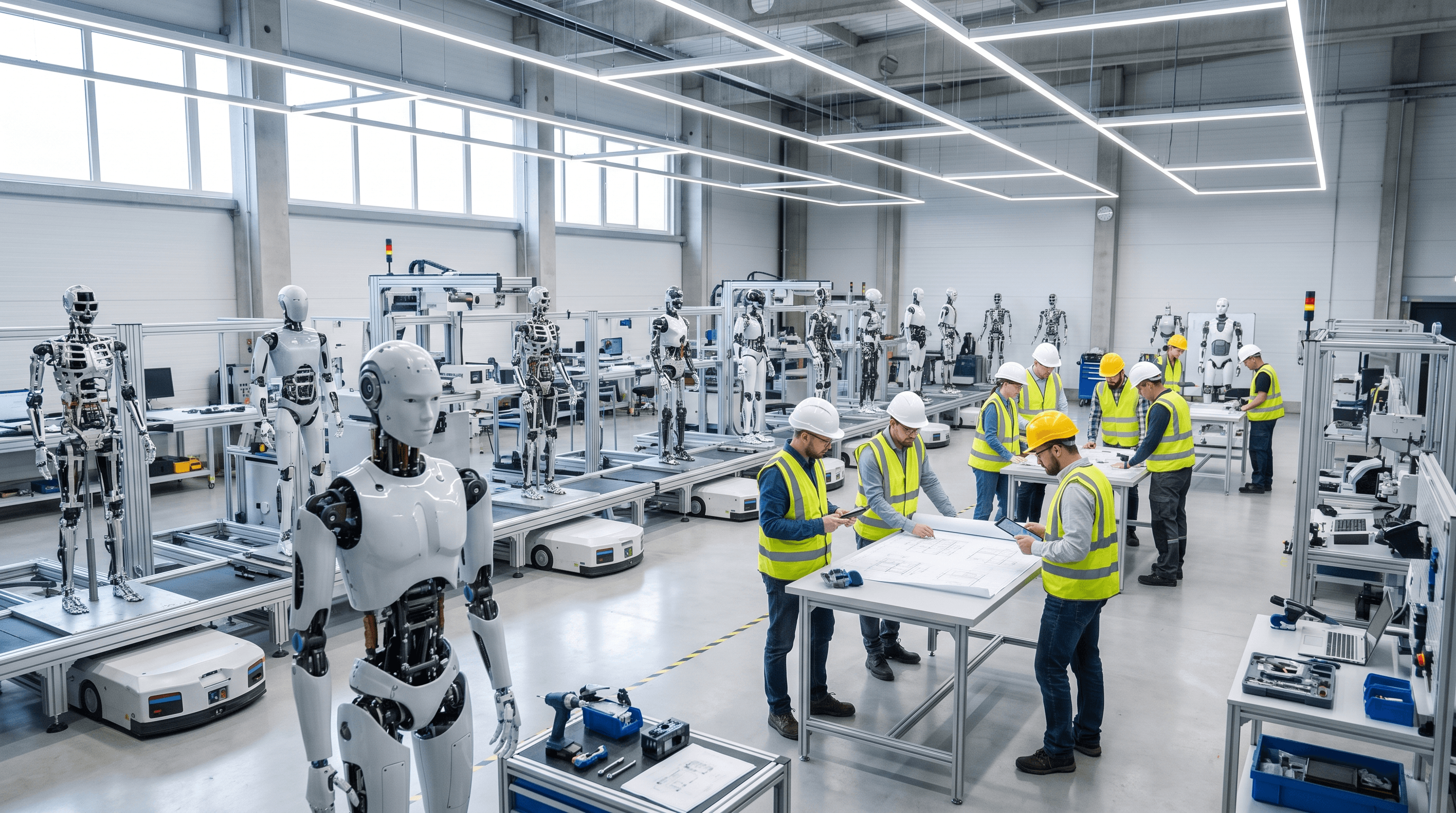
China's draft 15th Five-Year Plan (2026-2030), adopted at the state planning level, explicitly names accelerated development of future industries a priority and points to embodied intelligence (具身智能) as one of the new economic growth points, according to media covering the document. The wording itself doesn't set specific quantitative targets for sales or technology penetration — that's consistent with standard Chinese planning practice, where the five-year plan sets direction while concrete measurable targets appear later in State Council and ministry-level industry programs.
Two trends analysts single out
Industry reviews agree the 15th Five-Year Plan period will bring two key shifts: robotics applications expanding beyond traditional factory scenarios, and rapid growth specifically in the humanoid segment. At the same time, robot AI model architecture in 2026 is expected to remain mostly layered (separate perception, planning, and control modules), with a gradual shift toward end-to-end models appearing as pilot projects rather than a mass standard.
The price forecast — the most concrete figure of all
The most practical benchmark for buyers and investors is the price forecast: the average price of a humanoid robot in 2026 is 500,000-1,000,000 yuan, and industry analysts expect it to fall to 100,000-150,000 yuan by 2030 — a cumulative drop of 70-85% over five years. That trajectory echoes what happened with EV and solar panel prices a decade earlier, when state support and manufacturing scale collapsed the cost of a technology that had recently been niche.
What it means for buyers right now
For companies currently weighing robotics adoption, a forecast 3-7x price drop over five years isn't a reason to wait for it to get cheaper — it's a signal that the market will change fast: today's models will become functionally and price-obsolete faster than in most other categories of industrial equipment. The practical takeaway is choosing suppliers that explicitly build in modularity and lineup upgrades, rather than a one-time purchase meant to last for years.
Current models and pricing across robot segments are available in the Aura Robotics catalog.