
политика · гуманоиды · коммерциализация
'Work mode': China aims to move 10,000 humanoids from showrooms to real jobs
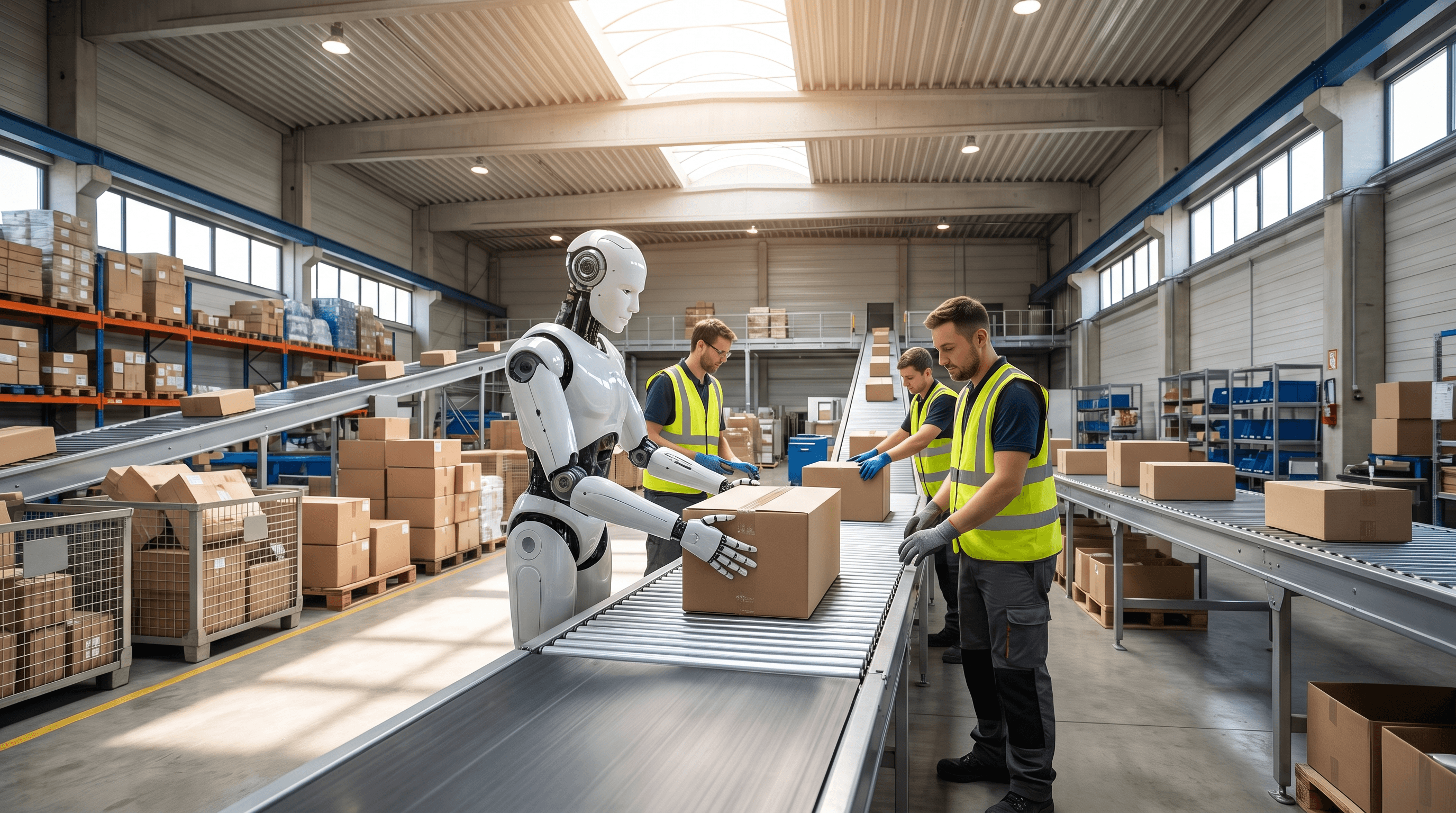
China's Ministry of Industry and Information Technology, together with the State-owned Assets Supervision and Administration Commission (SASAC), has launched a nationwide training program with an unusually concrete goal: move humanoid robots out of stage dances and marathon races and into real jobs on factory floors, in warehouses, and in hospitals, according to media covering the initiative. The official framing: "By the end of 2026, key humanoid robot products will complete application verification and regular deployment in a number of representative scenarios, entering 'work mode.'"
The number the whole program is built around
The target is over 10,000 commercially deployed humanoid robots by the end of 2026, across more than 100 application scenarios. The deployment model reportedly includes a "humanoid-robot-as-a-service" scheme — meaning not necessarily a direct purchase of expensive hardware by an enterprise, but access to a robot via subscription or task-based contract, lowering the entry barrier for mid-size businesses.
From flashy demos to boring but necessary verification
The point of the program isn't the raw robot count — it's the shift from one-off showcases to systematic verification: testing in manufacturing, logistics, and healthcare, where the decision to scale is made not by how impressive a demo looks but by accumulated statistics on reliability, downtime, and real cost savings on a specific operation. The absence of exactly this kind of mass real-world validation was the main gap in Chinese humanoid robotics as recently as 2024-2025, when the industry was famous for spectacular demonstrations but lacked meaningful operational-deployment data.
The state as both customer and coordinator
The joint involvement of the industry ministry and SASAC, which oversees the country's largest state-owned enterprises, suggests a portion of the 10,000 target robots will likely be deployed at state-sector sites — from energy to heavy machinery. That gives manufacturers a guaranteed sales channel at a stage when private business is still weighing the technology, while simultaneously building a state-level dataset on operational reliability that commercial buyers can later draw on.
Current humanoid and industrial robot models are available in the Aura Robotics catalog.