
AVIC · авиация · гуманоиды · промышленность
Fengxing-001: a humanoid built by aircraft makers — for aircraft maintenance and munitions handling
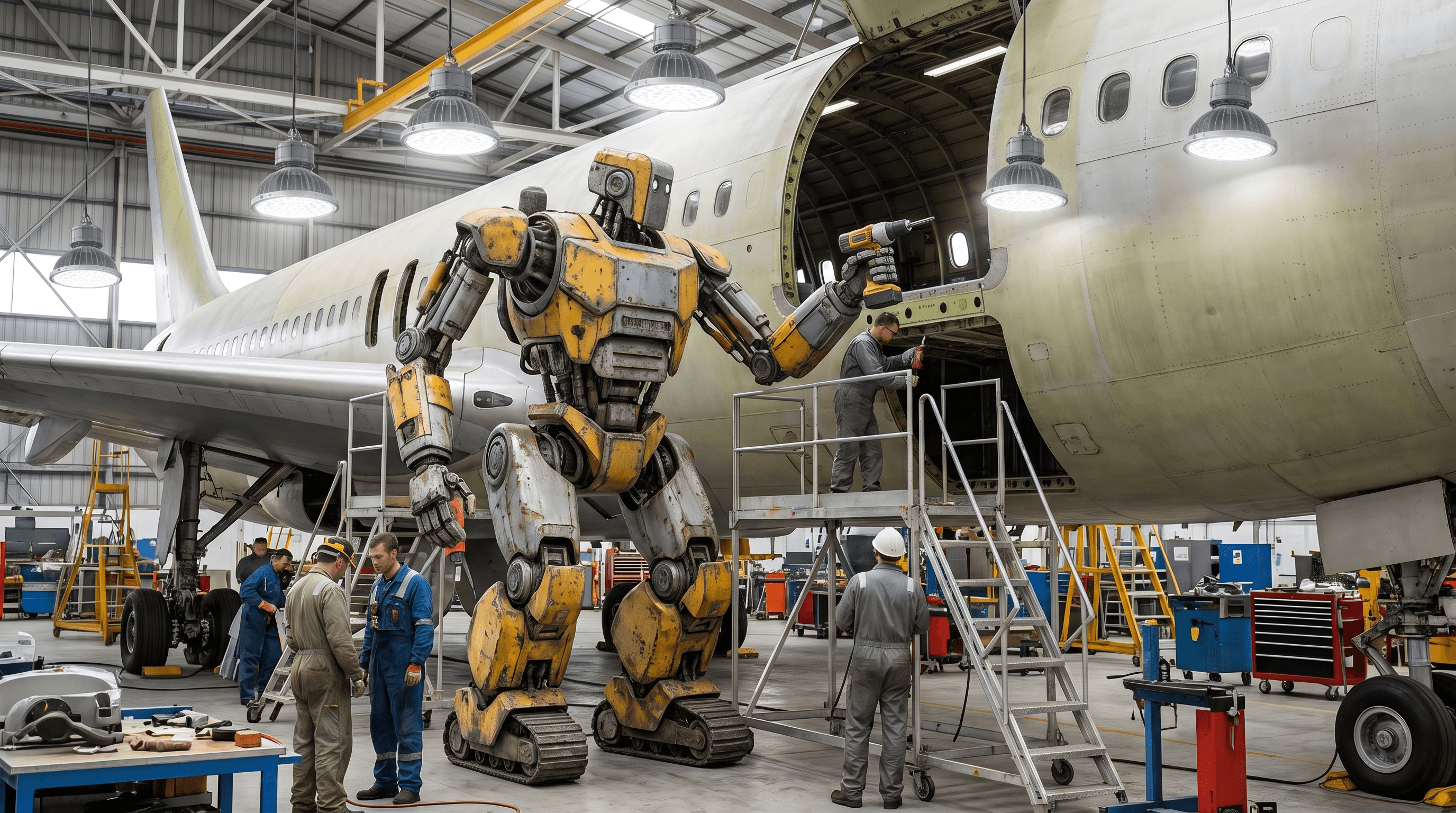
Among the exhibits at the 2026 World Robot Conference (WRC) in Beijing, one booth stood out precisely because nobody expected to see it among specialized robotics startups: Aviation Industry Corporation of China (AVIC). The conglomerate, known for building military and civilian aircraft, showed its own humanoid robot, Fengxing-001, designed for intelligent manufacturing, aircraft maintenance, and munitions-handling operations, according to trade media covering the show.
Why an aircraft maker builds a robot
At first glance, an aviation conglomerate entering humanoid robotics looks like a niche experiment. But the logic mirrors that of automakers entering the same market: AVIC already has precision mechanics, control systems, and experience handling heavy metal structures — competencies that transfer directly to building a robot capable of working with large fuselage components or munitions in settings where human operator error is especially costly.
Tasks that specifically call for a humanoid
Aircraft maintenance is an environment designed for humans: narrow technical bays, ladders, and tools built for two hands and vertical movement. A wheeled platform or a classic fixed-base industrial arm simply doesn't fit physically. A humanoid form factor lets the robot move across the same gangways and platforms as a human technician and use the same tools without retooling the workspace — which is exactly why large industrial organizations, not just specialized robotics startups, are increasingly choosing this form factor.
Part of a bigger picture
Fengxing-001's appearance sits alongside BYD's and other non-specialist players' entry into humanoid robotics — a defining 2026 trend where large industrial groups with their own engineering schools stop being mere customers for robots and start manufacturing them. For the market, this means faster tailoring of solutions to specific heavy-industry scenarios where startups lack either the capital or the domain expertise.
A catalog of manufacturers building robots for industrial tasks is available on the Aura Robotics site.