
итоги месяца · индустрия · гуманоиды · инвестиции · рынок
October recap: what actually changed in the industry this month
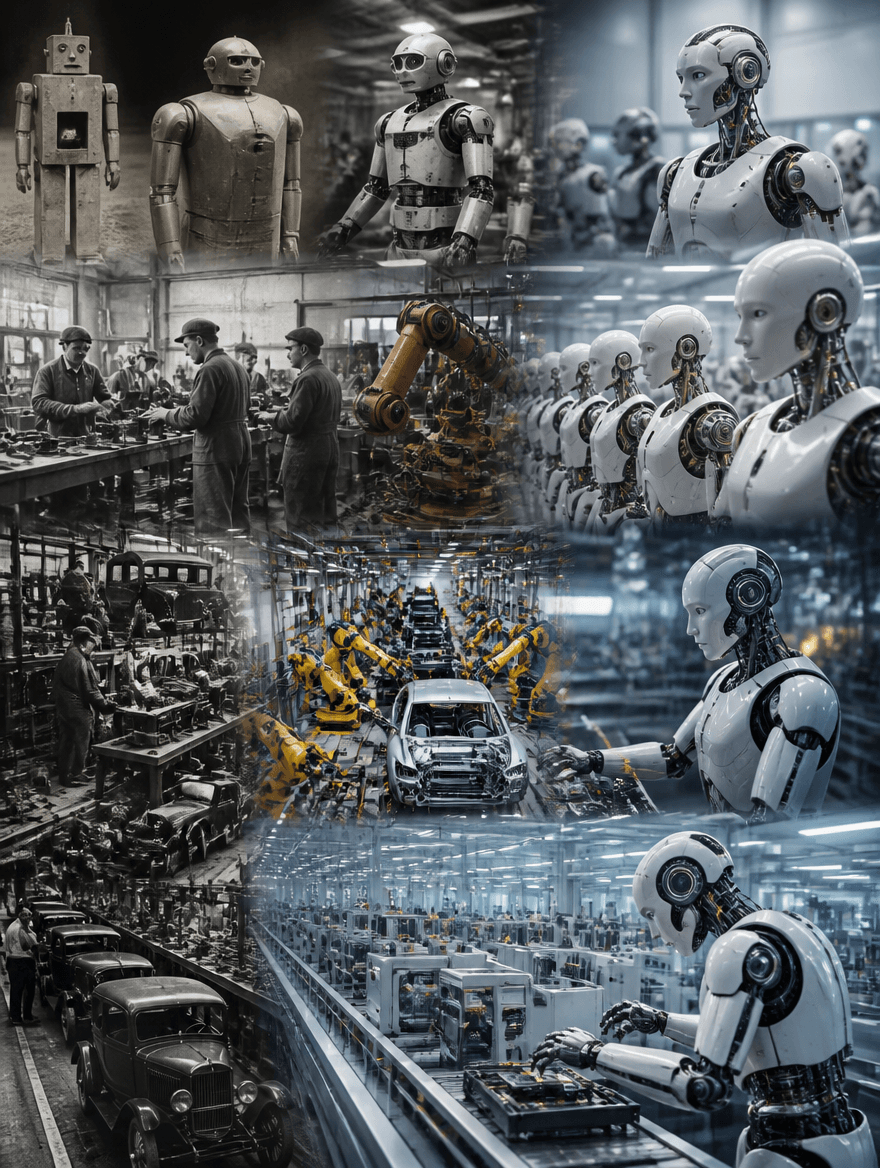
Over the month and a half we've been tracking — from mid-September through the end of October 2026 — the humanoid robotics industry managed to simultaneously scale up manufacturing capacity, close record funding rounds, and go through its first noticeable wave of sober investor reassessment. If September was the month of new platform announcements like the Fourier GR-3 and Kawasaki Kaleido-9, October became the month the market started stress-testing those announcements against money, certifications, and actual production lines.
Money: records and a first correction, at the same time
XPeng raised more than $900 million to develop its Iron humanoid, and D-Robotics closed a $400 million round — sums that would have looked unthinkable a year or two ago for a segment where serial commercial products still trail flashy presentations. But alongside these record rounds, Unitree's stock dropped roughly 40% from its peak after its market debut — a signal that retail and institutional investors have started separating real revenue from the sheer media appeal of the humanoid story. Add to that a rare moment of industry candor: CATL's chairman publicly assessed solid-state battery maturity at Technology Readiness Level 4 of 9, pushing the realistic horizon for mass adoption of that technology past 2030 — and forcing XPeng to adjust its own battery plans for Iron.
Manufacturing: from lab demos to actual factories
October brought several confirmations that humanoid robotics is moving from one-off demonstrations to serial production lines. Boston Dynamics, together with Hyundai, is preparing Atlas production at a Georgia plant; Toyota is rolling out a humanoid assembly line in Aichi prefecture; and the Japanese JAL-GMO alliance is testing robots at Haneda Airport — three independent projects united by the same logic: major industrial and transport companies are no longer watching humanoids from the sidelines but embedding them into their own manufacturing and operational chains.
Geography: the market physically expanded far beyond China
Perhaps the most underrated trend of October is the industry's geographic expansion well beyond traditional Chinese and Japanese hubs. AGiBot entered Malaysia and Indonesia, opening the country's first AI and Robotics Experience Center in Selangor with the relevant government minister in attendance. Foxconn is preparing its first humanoid production in Vietnam. Vietnamese company VinDynamics struck a partnership with Germany's Schaeffler. Dubai continues expanding its police and municipal service robot program, while on Bali, quietly and without press releases, delivery robots are spreading through the hotel sector. Indonesia and Malaysia, previously seen as pure import markets, are starting to turn into sites for pilot deployments and, in places, local assembly.
Regulatory and talent infrastructure is trying to catch up with the market
Alongside the commercial race, October made it more visible that the infrastructure around the industry — certification, standards, workforce training — isn't keeping pace with deployment speed. Humanoids still have no single certification standard covering all 80-plus jurisdictions, unlike cobots, which cleared that path over years of actual shipments. At the same time, China institutionalized embodied intelligence as a university major at nine schools and kept building out M-Robots OS — its own robot operating platform, fully open source since July 2025 and compatible with ROS1, ROS2, and Dora-rs at once, cutting migration costs for developers by roughly 80%.
The month's main takeaway
October 2026 showed an industry in transition: money and manufacturing capacity are growing faster than the regulatory and educational base meant to support them, and investors, for the first time in a while, started distinguishing companies with real revenue from companies with nothing but impressive demos. None of these processes is finished — this is more a snapshot of a market at the moment the first wave's euphoria gives way to a more demanding, but also healthier, growth phase.
You can track all the manufacturers mentioned in this roundup in our catalog.